Foundational guide
FLGR-242 Review and Discount Code: No Published COA
Three claims on the listing can be checked against public sources in about five minutes, and all three come back differently than the page implies. Price, code and what the certificate situation actually is.
FLGR-242 is sold as a follistatin construct, and the fastest way to evaluate it is not to argue about follistatin. It is to take three claims printed on the listing itself and check each one against a public source. All three can be checked in about five minutes, and all three come back differently than the page implies.
None of what follows argues that the material is not what it says it is. It argues that the listing does not currently let anyone find out.
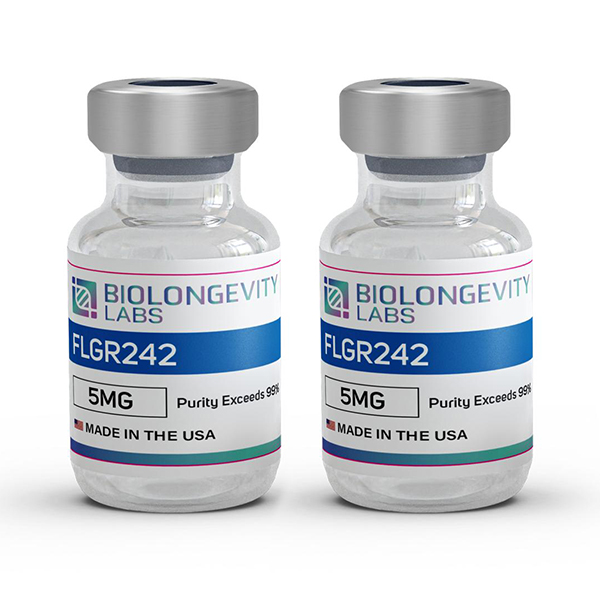
Where the product is listed
FLGR242 5mg Research Peptide, BioLongevity Labs
Sold in pairs of two 5 mg vials. The vendor describes it as a follistatin construct fused to an albumin binder, at roughly 40 kDa.
The code is applied at checkout. We have not verified what it returns, so we do not state a percentage. A sitewide banner sale was running when the page was checked and the shown price was $249.50, which is a temporary figure and not what the code does. Volume tiers of 5, 10, 15 and 20 percent attach to 6, 12, 24 and 48 pairs.
Laboratory research material only, not for human consumption. FLGR-242 holds no marketing authorisation in any market and has never been administered in a registered human trial. Affiliate link: we may earn a commission at no additional cost to you, and it does not change anything reported on this page.
What FLGR-242 is, and why calling it a peptide is misleading
The vendor sells it as “FLGR242 5mg Research Peptide” and describes it as a novel fragmented, modified version of follistatin-344 carrying a patented albumin binder. The stated construction is a follistatin protein fused to an albumin-binding element through a hydrophilic glycine-serine linker, given as GGSGGSGGSGGRLIEDICLPRWGCLWEDD, achieving high-affinity serum albumin binding below 20 nM Kd. Stated molecular weight is around 40 kDa. The synonyms offered are FST-Albumin Construct and Extended Half-Life Follistatin.
Forty kilodaltons is the number worth holding onto. A research peptide in the sense this market normally uses the word is a short synthetic chain of amino acids, often under 5 kDa, made by solid-phase synthesis and characterised by mass spectrometry against a single expected mass. A 40 kDa follistatin construct is a recombinant glycoprotein. It is expressed in cells, not synthesised on a resin, and it carries the analytical problems that come with that: host cell protein carryover, glycosylation heterogeneity, aggregation, and a purity figure that means something different than it does on a twelve-residue peptide.
Most pages covering this product describe it in the vocabulary of a small synthetic peptide. The verification you would want on a recombinant protein is not the verification a peptide vendor typically publishes, and on this product the vendor currently publishes neither.
The activin contradiction, three times on one page
The product description states that FLGR242 “does not bind to the protein activin.” The meta description and social card for the same page state that it is “studied for myostatin inhibition and activin binding.” The research applications section, again on the same page, lists “activin neutralisation assays.”
Those are not three phrasings of one idea. They are a denial and two affirmations of the same property, published together. And the property is not incidental. High-affinity binding and neutralisation of activins and related TGF-beta ligands is the established mechanism of follistatin. It is the reason follistatin is interesting at all. A follistatin construct that genuinely did not bind activin would be a substantially different molecule from the one the surrounding marketing describes, and the same page offers it for activin neutralisation assays, which is an application that presupposes the binding the description denies.
A reader cannot resolve this from the listing. There is no clarifying note, no reference to a binding study, and no data. What the contradiction reliably tells you is that the product copy was not reviewed against itself, which is a fact about the seller rather than about the molecule, and a relevant one when the same seller is the only source of every other claim on the page.
The COA is advertised on the listing and absent from the library
The page title carries “COA Included” and the description promises “comprehensive COAs.” The vendor maintains a public certificate library at biolongevitylabs.com/all-coas/. On September 8, 2026 that library held eight PDFs: a Cortagen certificate, and endotoxin reports for BPC-157 with TB-500, CJC-1295 with ipamorelin, DSIP, retatrutide, SS-31 and tesamorelin. Not one of them covers follistatin or FLGR242.
The gap between those two facts is the whole problem. A certificate that exists only inside the box, delivered after payment, cannot inform a purchase. It arrives after the only decision it could have changed. That is true even if the document is impeccable, and it is why a published library is the thing worth checking rather than the promise on the listing.
Note also what the eight published PDFs mostly are. Endotoxin reports establish that a preparation sits below a bacterial endotoxin limit. They do not establish identity, purity, or that the vial holds the mass on the label. For a 40 kDa recombinant glycoprotein those are the harder questions, and none of the published documents answers them for any product, let alone this one.
Four FLGR-242 checks anyone can run before buying
Everything above is reproducible. The table below is the same three findings plus the identity question, written as instructions rather than conclusions, with what each check returned on September 8, 2026.
| Claim on the listing | Where to check it | What it returned | Time |
|---|---|---|---|
| “Does not bind to the protein activin” | The same product page: meta description, social card, research applications list | “Activin binding” and “activin neutralisation assays” on the same page | Under a minute |
| “COA Included” and “comprehensive COAs” | biolongevitylabs.com/all-coas/ | 8 PDFs, none covering follistatin or FLGR242, and mostly endotoxin reports | About a minute |
| A research base implied by 12 cited papers | PubMed and ClinicalTrials.gov, searching both spellings | 0 results and 0 records for FLGR-242 and FLGR242 | Two minutes |
| Sold as a “research peptide” | The specification block on the listing itself | ~40 kDa albumin-binding construct, which is a recombinant glycoprotein rather than a synthetic peptide | One minute |
A claim that survives this kind of check is worth more than one nobody tested, which is the reason to run it rather than trust a review, including this one.
FLGR-242 vs follistatin-344, as far as the listing allows
The comparison people search for is FLGR-242 against follistatin-344, and the honest answer is that the listing supplies one side of it. The vendor positions the construct as derived from follistatin-344, fragmented and modified, with an albumin binder attached through the glycine-serine linker quoted above. The intended consequence of an albumin binder is a longer circulating half-life, since albumin association slows renal clearance of the molecule it carries, which is what the name Extended Half-Life Follistatin points at.
What is missing is any measurement. There is no published half-life for this construct in any species, no comparison against unmodified follistatin-344, and no binding data supporting or refuting the activin statement. The reasoning is plausible and the result is unmeasured, and those are different things. Treating a design rationale as a result is the single most common error in this category of product page.
The cited literature is about follistatin, not about FLGR-242
The listing cites twelve papers. We checked a sample and they are genuine. Systemic administration of follistatin288 increasing muscle mass in mice, from 2013, is real (PMID 23942549). Nanoparticle-mediated hepatic delivery of follistatin mRNA in mice, from 2018, is real (PMID 30555546). Work on follistatin in non-alcoholic fatty liver disease via mTOR, from 2022, is real (PMID 36325432).
Every one of them studies follistatin. None of them studied FLGR-242. They are largely rodent work, and they were published by groups with no connection to this product. A citation list of that kind performs a specific trick: it borrows the evidence base of a protein family and attaches it to a proprietary construct that has never been tested. The papers are not fake and the references are not padding. They are simply about a different subject than the product they appear under.
The direct searches close the question. PubMed returns zero results for FLGR-242 and zero for FLGR242. ClinicalTrials.gov returns zero records for both. There is no independent characterisation of this construct in the public literature, which means every property attributed to it, including the molecular weight, the albumin affinity and the activin statement, rests on the seller saying so.
FLGR-242 for sale: price, code, and what the sale banner hides
One pair, meaning two 5 mg vials for 10 mg total, listed at $499.00 when checked on September 8, 2026. Volume discounts of 5, 10, 15 and 20 percent attach to 6, 12, 24 and 48 pairs, and the largest bulk pack of 48 pairs runs to $19,161.60 at list. The discount code is Peptidedeck, entered at checkout. We have not verified what percentage it returns and will not state one.
A sitewide sale banner was running at the time of the check and the shown price was $249.50. That figure is worth reporting and worth ignoring in equal measure. Sitewide sales end, and a decision anchored to a promotional number is anchored to something that may not exist by the time you read this. Whatever the code and any live promotion do, they do it relative to $499.00.
What a checkable batch record for this product would contain
It is worth being concrete about what would resolve the situation, because “publish a COA” is too vague to hold anyone to. For a 40 kDa recombinant construct the useful document is not a one-line purity percentage from a peptide assay.
Identity is the first item, and for a protein of this size it means an intact mass measurement consistent with the stated 40 kDa, ideally supported by peptide mapping that confirms the sequence rather than only the mass. Purity comes second, and for a recombinant protein it needs a size-based method that can see aggregates and fragments, not just a reversed-phase chromatogram. Content is third: the mass actually in the vial against the 5 mg on the label, which is the figure that determines whether a per-mg price means anything. Then the manufacturing-specific items that only apply because the material is expressed in cells rather than synthesised, chiefly host cell protein and residual DNA. Endotoxin sits alongside those rather than in place of them.
Each item also needs a batch identifier and a named testing laboratory, because a certificate without a lot number cannot be matched to the vial that arrives. The vendor states US GMP manufacturing and third-party verification. Both are claims of exactly the type a lot-specific certificate would substantiate.
Until such a document exists in public, the position on FLGR-242 is straightforward. The identity question is open, the activin question is contradicted on the seller’s own page, and the evidence question is not open so much as empty. Anyone buying is buying on the seller’s word, which is a legitimate decision to make knowingly and a bad one to make by accident.
Frequently asked questions
- Is FLGR-242 the same thing as FLGR242?
- Yes. The vendor writes it as one unhyphenated token, FLGR242, on the product page and in the product title. Search demand splits across FLGR-242, FLGR 242 and FLGR242, and all three point at the same listing. The spelling difference is the only difference.
- What is the FLGR-242 dosage?
- No dosing figure appears on this page, and there is no basis on which to publish one. Dosing is derived from human pharmacokinetic and safety studies, and this construct has none: PubMed and ClinicalTrials.gov both return zero results for the name. Any dosage table you find for it has been assembled from follistatin literature in animals or invented outright.
- How does FLGR-242 differ from follistatin-344?
- The vendor describes it as a fragmented, modified version of follistatin-344 carrying a patented albumin binder, with a molecular weight around 40 kDa and albumin affinity under 20 nM. It also states the construct does not bind activin, which would be a substantial functional departure from follistatin rather than a formulation tweak. No published head to head comparison of the two exists.
- Does the FLGR-242 listing come with a COA?
- The page title says COA included and the description promises comprehensive COAs, but the vendor's public certificate library holds eight PDFs and none of them covers follistatin or FLGR242. Whatever document ships with an order cannot be examined before ordering, which is the point at which a certificate would inform the decision.
- What does the discount code do at checkout?
- The code is Peptidedeck, entered at checkout. We have not verified what percentage it returns, so we do not state one. The list price for one pair, meaning two 5 mg vials, was $499.00 when checked on September 8, 2026, and that is the number to anchor against rather than any banner sale price.
Limitations of the evidence
Nothing on this page describes or recommends human use, and no dosing, reconstitution or administration guidance appears anywhere in it. There is no published human data on this construct, no PubMed record and no registered trial, so no efficacy statement of any kind is made or implied. Vendor claims are reported as claims and attributed to the listing they appear on, not endorsed. Prices, the certificate library contents and the database searches described here were checked on September 8, 2026 and can change without notice. The follistatin papers referenced are studies of follistatin, largely in mice, and none of them studied FLGR-242.